

A message the market might not believe.
The brand is forty years old. The campaign asks your own customers to buy less, and promises to repair anything they already own, for life. Sales thinks it costs a season. The advocates you hoped would carry it are the ones who called a competitor’s pledge greenwashing in March. The media buy closes Friday.
The question is not whether people like the idea. It is whether they believe you — and which sentence is the one they stop believing at.
A pledge that only works if it’s believed.
Northwind is a forty-year-old Canadian outdoor brand — parkas, packs, and a repair bench at the back of the flagship store that has been there since the eighties. In six weeks it launches Built to Be Repaired: a lifetime free-repair pledge on everything it has ever made, and a campaign that asks its own customers to buy less. The line is written. “The most sustainable jacket is the one you already own. Buy less. Buy better. Repair, don’t replace.”
Inside, nobody agrees. The growth side has a number for what happens if the message works on exactly the wrong people. Two retail partners have asked, politely, what it means for the fall order. And the sustainability advocates the brand counted on to amplify it have been unforgiving about other people’s pledges all year. Somebody has to decide by Friday whether this launches as written, launches changed, or waits.

What testing a message usually costs.
Two focus groups, a panel test, and a deck.
A brand with a research budget books two or three groups, recruits, moderates, runs a panel survey alongside them, waits, and gets a deck reporting how many people agreed with each statement. A brand without one asks the people down the hall and the agency that wrote the line.
Every segment, every line, before the buy closes.
Paste the line and the brief behind it. PRISM builds the segments you are actually trying to move — core supporters, the undecided middle, the advocates ready to call it greenwashing, retail partners, the barely paying attention — has each of them read it, argues over the reactions, and returns the lines that land, the lines that backfire, and the change the evidence supports. It never invents a discount, a warranty extension or a perk you did not offer. If the audience wants one, that is a finding, not a rewrite.
Published industry estimates: focus-group ranges from Drive Research and GreenBook; panel-test cost and survey lead time from Drive Research; the 24–48 hour automated-panel turnaround is SurveyMonkey’s own published figure. Every figure and its source is on Compare.
This exact message, and what came back.
An illustrative example written to the shape of a current Campaign Decision Report — the line and the brief as a customer would submit them, and the call as the report delivers it.
A heritage outdoor brand's boldest message
A 40-year-old Canadian outdoor brand is launching Built to Be Repaired: a lifetime free-repair pledge, and a campaign asking its own customers to buy less. Growth-focused stakeholders and retail partners are nervous. Sustainability advocates may call it greenwashing — green claims the brand can't back up.
A Campaign Decision Report
Refine first. The pledge is believed; the reason to believe it isn't there yet. Core supporters read “keep it going for life” as the brand they already trust; the undecided middle and the advocates read it as a claim waiting for a number. Put one verifiable proof point beside the promise — a repair turnaround, a durability result, a count of jackets repaired last year — and the line holds. Leave “buy less” exactly as it is: it is the sentence that separates this from every other sustainability campaign, and the audience that winces at it is the audience that was never going to buy the jacket.
- The Call
- Strategic Position
- Audience Reaction
- What Resonates / What Creates Friction
- Reach & Performance Forecast
- Recommended Refinements
- Risk & Watch-outs
- Evidence & Confidence
- Your Original Input
What you know on Thursday that you didn’t on Monday.
Written for the person deciding whether this launches as written — the call first, then everything it rests on.
- Which sentence carries it, and which one loses the roomEvery line is read by every segment. You get the ones that landed and the ones that backfired, quoted — not a single score for the message as a whole.
- Where the greenwashing charge comes fromNot just that it might be made. What has to be missing for it to stick, who makes it first, and what removes it.
- The proof point the pledge needsWhat evidence the audience wants standing beside a lifetime promise — repair volumes, test results, an emissions figure — and which one does the most work.
- What your retail partners hearPartners and internal stakeholders are audiences too. You see what the fall order conversation sounds like after this launches, before you are in it.
- Who is persuadable, and on what termsThe undecided middle is not one group. You get what each part of it needs before it moves — and the ask that moves nobody.
- How much to trust itCitations for every finding, the reviewers’ disagreements printed rather than averaged, the events that would reverse the call, and a confidence reading that can only be lowered.
Faster and cheaper. And different in kind.
Quality
A focus group gives you eight people who were free on a Tuesday, read through a moderator. A briefing reads the message with every segment you care about — including the ones who would never sit in your room — has a named panel of AI reviewers argue over the reactions, sends a hostile reader at the draft, and cites the reactions each finding rests on. More perspectives, adversarial review, and evidence you can check.
Speed
Weeks to recruit, field and write up a group study; at least two weeks of lead time for a custom survey. About a minute for a briefing — and another for the re-test after you revise, which is where most of the value sits.
Cost
One credit, one full briefing — against US$7,000–20,000 for a single focus group or US$5,000–15,000+ for a 400-response panel test. The revised line gets tested too, rather than waiting for next quarter’s research budget.
Figures as above: Drive Research and GreenBook (focus groups), Drive Research (online panel test). Sources on Compare.
Test. Revise. Test again.
Take the refinements and rewrite the line yourself, or let Rewrite my message & re-test apply the report’s own suggestions and run the revised version straight away. The new report opens with Since your prior run: what got resolved, what is new, and how the reception shifted.
When the campaign is live, the follow-up questions the report generated for itself — was the repair claim challenged in the first two weeks? — let you record what actually happened, and the record grows into a track record.
Read it in the app, publish it to your own branded portal, download the PDF, share it by secure link, or listen to the audio briefing before the stakeholder call.
From a written line to audience signal in four steps.

Tell it what's going on
A few sentences in your own words, a draft if you have one, a link if the conversation is already out there. A short guided conversation fills in the rest — mostly by clicking.

PRISM builds your audience
A simulated population built from your stakeholders — customers, employees, residents, journalists, regulators — including the real public bodies your situation pulls in.
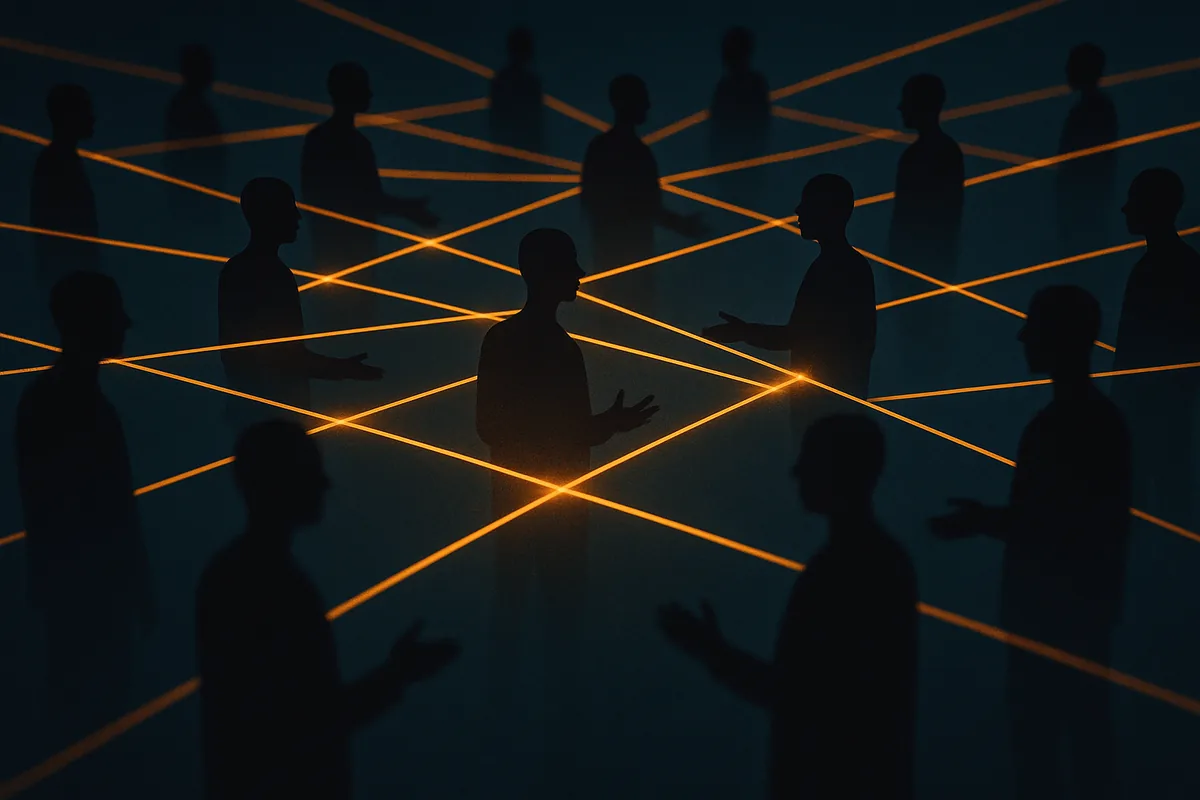
They react. Then it's argued.
The audience reacts to the actual material. A named panel of AI reviewers argues about what the reactions mean, and a reviewer whose job is to break the draft attacks the conclusion.

You get the Decision Report
The call, the evidence, the disagreements, what would change the call, and an honest confidence reading. Read it, share it from your own portal, download it, or listen to it.
Live from the catalog — what the app charges today.
Every name, description and price below is read from the same catalog the app bills from, at the moment you load this page. Change a product in the back office and this page changes with it.